
Beyond the Classroom: The Practical Skills most people Rarely Get Taught
Ask Jim and Sheila Musto how Quest Ascent got started, and the story goes back to a friend of theirs in Zimbabwe and the founder of Quest Africa, Harvey Leared, who noticed something simple: many young people were leaving school lacking useful life skills, without which their lives would be limited and their ability to be useful and have an exciting, adventurous life would be compromised. It seemed that the opportunity for young people to learn these skills was diminishing. This is partly due to the distraction of devices and other easy access entertainment, but there has also been a cultural shift, whereby people tend to be more concerned about comfort and security, at the expense of real life adventure and the learning of practical skills.
That gap is still central to what Quest Ascent does. Here's a range of the typical skills that will be covered in a Quest program.
Hands-on trades
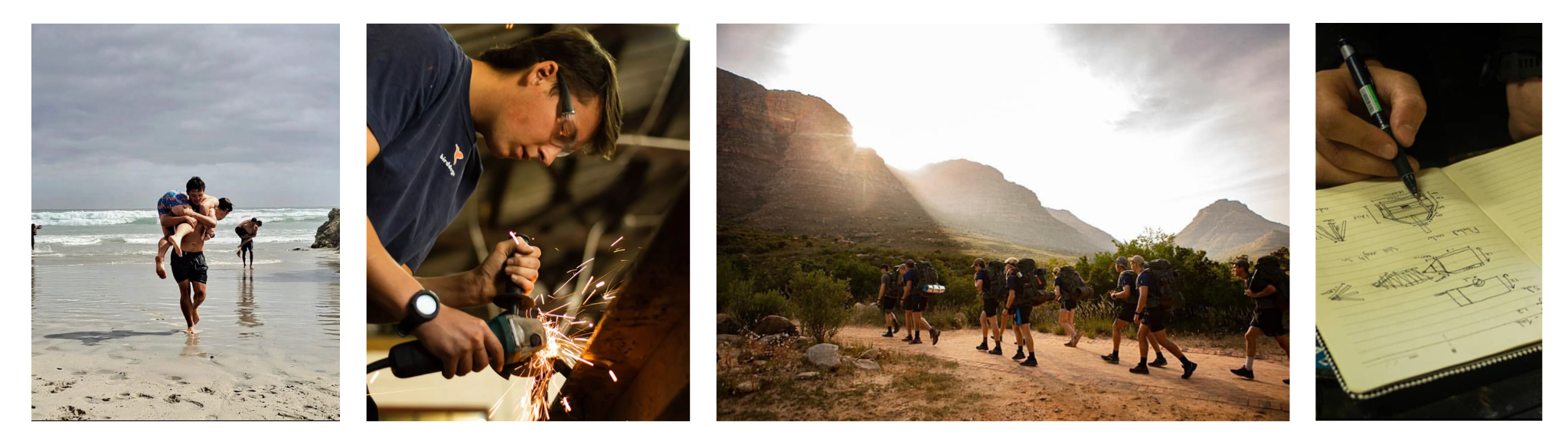
Working alongside experienced instructors, students rotate through a full week on each of a range of hands-on trades. There's basic mechanics, plumbing and electrics, the kind of practical DIY know-how most people only pick up by accident, in their thirties, when something breaks. And there's welding, woodwork and building, rounding out a set of skills most students have never had reason to try before.
Business and money skills
The business training focuses on two aspects: Entrepreneurship and Money Management. Entrepreneurship teaches how to conceive a business idea and then produce the financial plan and marketing plan to check the business viability. It includes the vital understanding of basic financial literacy and practical use of spreadsheets. Money management provides the basic principles for saving and investing, and starts the process of actually ‘’playing the game’’, getting to know the rules, and learning the basics of geopolitics, demographic and basic long term investing.
Food, from source to table
Quest aims to produce as much of its own food as possible from the farm. Growing vegetables and herbs in the open garden and aquaponics system, producing our own farm eggs and milk, butchering our own venison, beef and mutton, all grown on the farm. Questers get involved in the whole process from hunting, skinning and butchering game, to livestock management and working in the gardens. They then learn to harvest the food and prepare healthy, delicious meals. These cooking sessions led by Sheila at the Musto house culminate in a proper sit-down, home-grown feast, which is a highlight for any Quester. They are encouraged to eat well, without rushing, appreciating the effort and skill it takes to produce a tasty, healthy meal.

Wilderness and survival skills
Under the farm's outdoor instructors, students learn tracking, basic bushcraft, and, during the programme's dedicated survival component, how to find food and water and build shelter using the materials available in the bush or on the shoreline. It's taught as a practical skillset, though as most Questers will tell you, the real value is in the renewed appreciation and gratitude for things that most people take for granted. You will also learn how little we actually need to survive and even to thrive, if we get the basics right.
Weapons handling and Hunting
The weapons training and hunting is always a popular module. Under the experienced eye of Jaco Prinsloo, men and women participants will get a solid grounding in weapons safety, handling and shooting, including rifles, shotguns and sidearms. Each week, someone in the group will be selected to ‘’shoot for the pot’’, and the team will help with skinning and processing in the butchery.
Farming skills and Land management
In addition to the skills learnt in the garden, they will be introduced to livestock management and some of the principles of regenerative farming. This often sparks an interest which can lead to specializing in Livestock and Regen farming in the Core plus 4th term. Many Quest graduates will go on to study agriculture or work in the farming sector.
Physical competence and Adventure sports
Physical fitness and competence is built through daily physicals, the Saturday "Epics", the kayaking and rock climbing, the multi-day hiking trips, including a wild coast hike and a week of rock climbing and hiking in the Cederberg mountains. The physical fitness program aims to build a high level of strength and fitness, competence in some adventure sports, and with the added benefit of developing grit, perseverance and self discipline. The Epics have become iconic at Quest, and there is fierce competition to achieve the ‘’gold standard’’, the ‘’nails’’ and the much coveted bush jacket.
Why it's taught this way
None of this is delivered as a checklist to complete or pass so that you get the certificate. Participants move through the year in small groups of eight, rotating between instructors, so each skill is taught hands-on, in a low-pressure setting, by someone who's genuinely good at it. The goal isn't a certificate. It's the quiet building of real confidence as you learn that you can do stuff; you can make a plan if the car breaks down, or the power goes out, or the plumbing breaks, or you need to hunt for the pot, or you need to produce a business plan and present it to investors, or rescue someone in the mountains, or handle yourself on a horse, or a kayak, or a rock face with ropes….or make a meal for eight and serve it with confidence, while enjoying and inspiring people with a positive and infectious zest for life. It’s more about attitude and a growth mindset than talent or skills or knowledge. Talent can and must be developed, skills can and must be learnt, and knowledge is useful if coupled with wisdom to use it well.
This kind of competence, mindset and attitude to life doesn't show up on a CV in any obvious way, but these qualities and skills broaden the scope of life experience. As Braveheart famously said “All men die, but not all men truly live”. Quest aims to equip young people to “truly live”